
Economics' Gowrisankaran and Team: Grid Interconnections and Renewable Energy
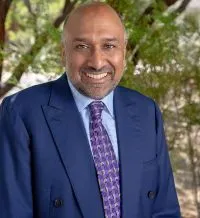
Over the past year, with the help of an ISERP seed grant, Economics professor Gautam Gowrisankaran and his co-investigators Ashley Langer (University of Arizona) and Nick Ryan (Yale) have been working to study the interconnection queue that admits new plants to the California electricity market.
The Issue
The past decade has seen a surge in new renewable power plants seeking to connect to the electric grid. In California, the process whereby new projects connect to the grid was created when traditional sources dominated the energy supply. New potential plants enter an interconnection queue, where they learn their costs of connection and then decide whether to connect.
Yet the connection needs of these new renewable energy plants differ from the needs of more traditional electricity production, as wind and solar plants tend to be smaller and more dispersed than coal, nuclear, or natural gas generators. This massive increase in interconnection requests has lead to greater uncertainty, since connection costs depend on the other plants trying to connect to the grid. This has led to a substantial backlog of projects, nearly four times as many projects currently in the queue as there is total installed fossil fuel capacity in California.
The Project
This is where Gowrisankaran, Langer, and Ryan come in. Using fifteen years of rich data from the California Independent System Operator (CAISO), they have been creating models with the goal of providing concrete guidance as to how interconnection queue policy affects grid integration of renewable energy.
Their models replicate the substantial logjam seen in the California Interconnection Queue, and they have found evidence that excessive entry into the queue may be occurring because CAISO is allocating some valuable transmission capacity for free. They have also found evidence that projects’ costs are interdependent; this may create a holdup in which projects with high cost quotes remain in the queue and hope for lower future quotes, depending on the decisions of other projects.
The work of Gowrisankaran, Langer, and Ryan is ongoing. They are now starting to model how alternative policies, like auctioning off spare grid capacity, would change queue congestion and renewable energy investment. Langer has presented a preliminary paper at a seminar New York University, and Ryan will be presenting at the POWER conference in Berkeley on March 19.